The best walking sticks feel like a natural extension of your arm: light, comfortable to hold and set at exactly the right height. Whether you need a little extra balance on walks or steady support around the house, this guide explains the main types and shares our shortlist of well-made sticks from trusted UK mobility brands.
Steadier steps, more confidence
A good stick takes pressure off a sore hip or knee and gives you a reassuring extra point of contact with the ground.
In this guide- The main types of walking stick, and who they suit
- Choosing a comfortable handle
- Our shortlist of walking sticks
- How to set the height and look after the tip
The short answer
- Start with an adjustable stickPush-button height adjustment makes it easy to get the fit just right.
- Handles matter for sore handsErgonomic (Fischer-style) handles spread pressure across the palm, which helps with arthritis.
- Quad sticks for extra stabilityThree or four feet give a wider base, often helpful after a stroke.
- Fit it to your wrist creaseWith arms relaxed, the top of the handle should line up with the crease of your wrist.
Contents

Types of walking stick
- Adjustable sticks: usually aluminium, with a push-button to change the height. The best all-round choice for most people.
- Folding sticks: fold into three or four sections and slip into a bag. Ideal if you only need a stick some of the time.
- Wooden sticks: classic and attractive, often with a crook or derby handle. They need cutting to the right length.
- Quad and tripod sticks: a small base with three or four feet. More stable, and they stand up on their own.
- Seat sticks: unfold into a small perch for queues, gardens and sporting events.
Choosing a handle
- Crook: the traditional curve. Easy to hang on your arm, but it concentrates pressure in your palm.
- Derby: comfortable and easy to grip, and it hooks over a chair or table edge.
- Ergonomic or anatomical (Fischer) handle: moulded to spread your weight across the palm. Often recommended for arthritis; buy the left or right version for the hand you’ll use.
- Offset or swan-neck: places your weight directly over the shaft, which can feel steadier.
Our walking stick shortlist

Days Standard Adjustable Walking Stick
Best for: A first walking stick for everyday use
Days is a long-established UK mobility brand, and its adjustable aluminium sticks are a staple in NHS physio departments. Light, sturdy, simple to adjust and good value.
What we like
- Light and sturdy
- Easy push-button height adjustment
- Replaceable rubber ferrule
Worth knowing
- Plain, functional look
- Standard handle isn't ideal for arthritis
Prices and availability are accurate as of the last update and may change. Please check the listing (including maximum user weight and dimensions) before you buy.
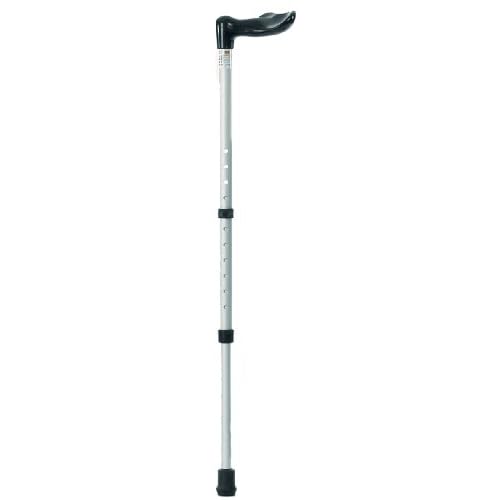
NRS Healthcare Fischer Handle Adjustable Walking Stick
Best for: People with arthritis or sore palms
Fischer (anatomical) handles are shaped to fit your palm, spreading pressure so the stick is more comfortable to lean on. NRS Healthcare is a long-established UK supplier of daily living aids. This listing is the right-handed version, so check you choose the hand you need.
What we like
- Spreads pressure across the palm
- Comfortable for longer walks
- Usually height-adjustable
Worth knowing
- Handed: buy left or right
- Handle doesn't hook over a table
Prices and availability are accurate as of the last update and may change. Please check the listing (including maximum user weight and dimensions) before you buy.

Drive DeVilbiss Adjustable Folding Walking Stick
Best for: Holidays, days out and occasional use
A height-adjustable stick that folds into sections held together by an internal cord, so it tucks into a handbag or rucksack when you don’t need it.
What we like
- Folds small for a bag
- Height adjustable
- Light to carry
Worth knowing
- Slightly less rigid than a one-piece stick
- Check the maximum user weight
Prices and availability are accurate as of the last update and may change. Please check the listing (including maximum user weight and dimensions) before you buy.

Days Quadruped Adjustable Walking Stick
Best for: Extra stability, especially after a stroke
A four-footed base gives a much wider area of support than a single tip, and the stick stands up on its own, so it won’t clatter to the floor.
What we like
- Very stable base
- Stands up by itself
- Height adjustable
Worth knowing
- Heavier than a standard stick
- Base can catch on stairs
Prices and availability are accurate as of the last update and may change. Please check the listing (including maximum user weight and dimensions) before you buy.

Wooden Derby Handle Walking Stick
Best for: A traditional, elegant everyday stick
A traditional wooden stick with a comfortable derby handle that’s easy to grip and hooks over a table edge. Smart enough for any occasion.
What we like
- Attractive traditional look
- Comfortable derby handle
- Hooks over a table edge
Worth knowing
- Fixed height (listed at 94cm)
- Not height adjustable
Prices and availability are accurate as of the last update and may change. Please check the listing (including maximum user weight and dimensions) before you buy.
How to set the right height
Stand up straight in your everyday shoes with your arms relaxed. The top of the handle should be level with the crease on the inside of your wrist, so your elbow bends slightly when you hold it. Our full guide on how to measure a walking stick explains this step by step, including which hand to use.
Look after the rubber tip
The ferrule is your stick’s grip on the ground. Replace it as soon as the tread wears smooth or splits. Measure the diameter of your stick’s shaft before ordering a replacement.
When you need more support
If you lean heavily on your stick, a walking frame or rollator may be safer. See our guides to the best zimmer frames and the best rollators.
More trusted help with walking sticks
A physiotherapist can recommend the safest walking sticks for your needs, often for free. The NHS guidance on preventing falls and Age UK have more independent advice on staying steady and confident.
Keep reading
Frequently asked questions
What is the best type of walking stick for elderly people?
For most people an adjustable aluminium stick with a comfortable handle is a good start. If you need more stability, a quad stick or a walking frame may be better. A physiotherapist can advise.
Which hand should I hold my walking stick in?
Hold the stick in the hand opposite your weaker or painful leg, and move it forward at the same time as that leg.
Are folding walking sticks safe?
Yes, good quality folding sticks are safe for everyday use within their weight limit. They’re slightly less rigid than one-piece sticks.
Can I get a walking stick VAT-free?
If you have a long-term illness or disability, walking sticks are usually eligible for VAT relief. See our VAT relief guide for details.