A walking stick is one of the simplest mobility aids, but a stick at the wrong height can do more harm than good. Knowing how to measure for a walking stick properly takes about two minutes. This guide explains how to do it, which hand to use, and how to choose a stick that feels comfortable and safe.
A walking stick that fits you properly
A well-fitted stick takes some weight off a sore hip, knee or ankle and gives you a steadier third point of contact with the ground.
In this guide- How to measure your stick height at home
- Which hand to hold your walking stick in
- Choosing a handle, tip and type of stick
- When you might need more support
The short answer
- Measure to your wrist creaseStand tall with arms relaxed; the top of the handle should be level with the crease of your wrist.
- Hold it on your stronger sideUse the stick in the hand opposite your painful or weaker leg.
- Check the rubber tipA worn ferrule (the rubber foot) can slip. Replace it when the tread wears smooth.
- Adjustable sticks are easiestAn adjustable aluminium stick lets you fine-tune the height, which is ideal for a first stick.
Contents
How to measure a walking stick
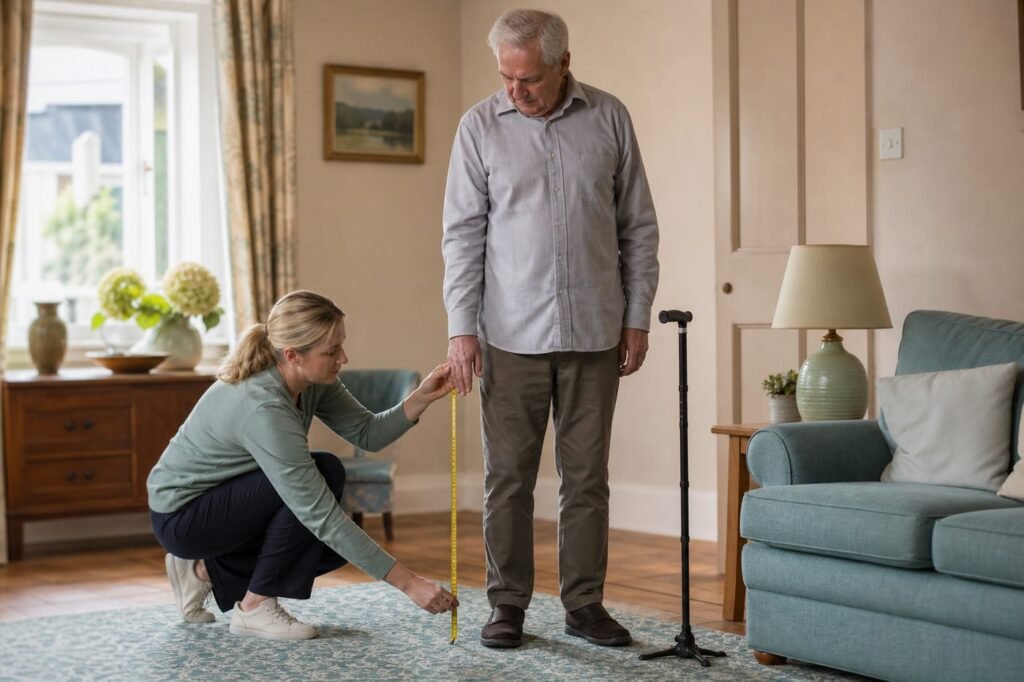
You’ll need a helper, a tape measure and the shoes you wear most often.
- Stand up straight on a hard floor, wearing your usual shoes.
- Let your arms hang loosely by your sides.
- Ask your helper to measure from the floor to the crease on the inside of your wrist.
- That measurement is the right height for your walking stick, from the floor to the top of the handle.
When you hold the stick, your elbow should bend slightly, at about 15 to 20 degrees. If your shoulder lifts, the stick is too tall; if you lean over to reach it, it’s too short.
If you have a wooden stick that’s too long, it can be cut down, but measure twice. For most people, an adjustable stick is simpler.
Which hand should you hold a walking stick in?
This surprises many people: hold the stick in the hand opposite your weaker or painful leg. So if your right knee is sore, hold the stick in your left hand.
Move the stick forward at the same time as your weaker leg. This spreads the load, just as your arms naturally swing when you walk.
On stairs, use the handrail on one side and the stick on the other. A helpful rhyme physiotherapists use is “up with the good, down with the bad”: step up with your stronger leg first, and step down with your weaker leg and the stick first.
Choosing the right handle
- Crook handle: the classic curved shape. Easy to hang over your arm, but it can put pressure on the palm.
- Derby handle: comfortable and easy to grip, and it hooks over a table edge.
- Ergonomic or orthopaedic (Fischer) handle: moulded to spread pressure across your palm. Often recommended for arthritis. These come in left and right versions.
- Swan neck or offset handle: places your weight directly over the shaft, which some people find steadier.
Types of walking stick
- Standard adjustable sticks: lightweight aluminium with push-button height adjustment.
- Folding sticks: fold into a bag when you don’t need them. Handy for holidays and days out.
- Tripod and quad sticks: three or four feet give a wider base and can stand up on their own. They suit people who need extra stability, often after a stroke.
- Seat sticks: unfold into a small perch. Useful for queues or watching grandchildren play sport.
Look after the ferrule
The rubber tip, called a ferrule, is your stick’s grip on the ground. Check it every few weeks. Replace it when the tread wears smooth or the rubber splits. Ferrules are inexpensive and come in standard sizes, so measure the end of your stick before you buy.
When a stick isn’t enough
If you find yourself leaning heavily on your stick, or you can’t walk far before tiring, you might be better with a walking frame or a rollator. See our guide to the best rollators in the UK, and remember that your council or the NHS may provide walking aids free after an assessment.
Buying for someone you care for?
Our carers' guides cover the practical and emotional side of helping someone stay independent.
Read our carers' guidesMore help on how to measure for a walking stick
Now you know how to measure for a walking stick, it’s worth asking a physiotherapist to check the fit, especially after a fall. The NHS guidance on preventing falls and Age UK offer more free, independent advice on walking safely.
Start with our main guide
- Best Walking Sticks UK: Adjustable, Folding and Quad Sticks – Adjustable, folding, ergonomic and quad sticks for steadier steps.
Frequently asked questions
How do I know if my walking stick is the right height?
Stand straight with your arms relaxed. The handle should be level with the crease of your wrist, and your elbow should bend slightly when you hold it.
Should I use a walking stick on my good side or bad side?
Hold the stick on your good (stronger) side, opposite the painful or weaker leg, and move it forward with your weaker leg.
Can I get a walking stick on the NHS?
Yes, in many areas a physiotherapist or occupational therapist can provide a walking stick after an assessment. Ask your GP for a referral.
How often should I replace the rubber tip?
Check it regularly and replace it as soon as the tread looks smooth or the rubber cracks. For daily users that may be every few months.