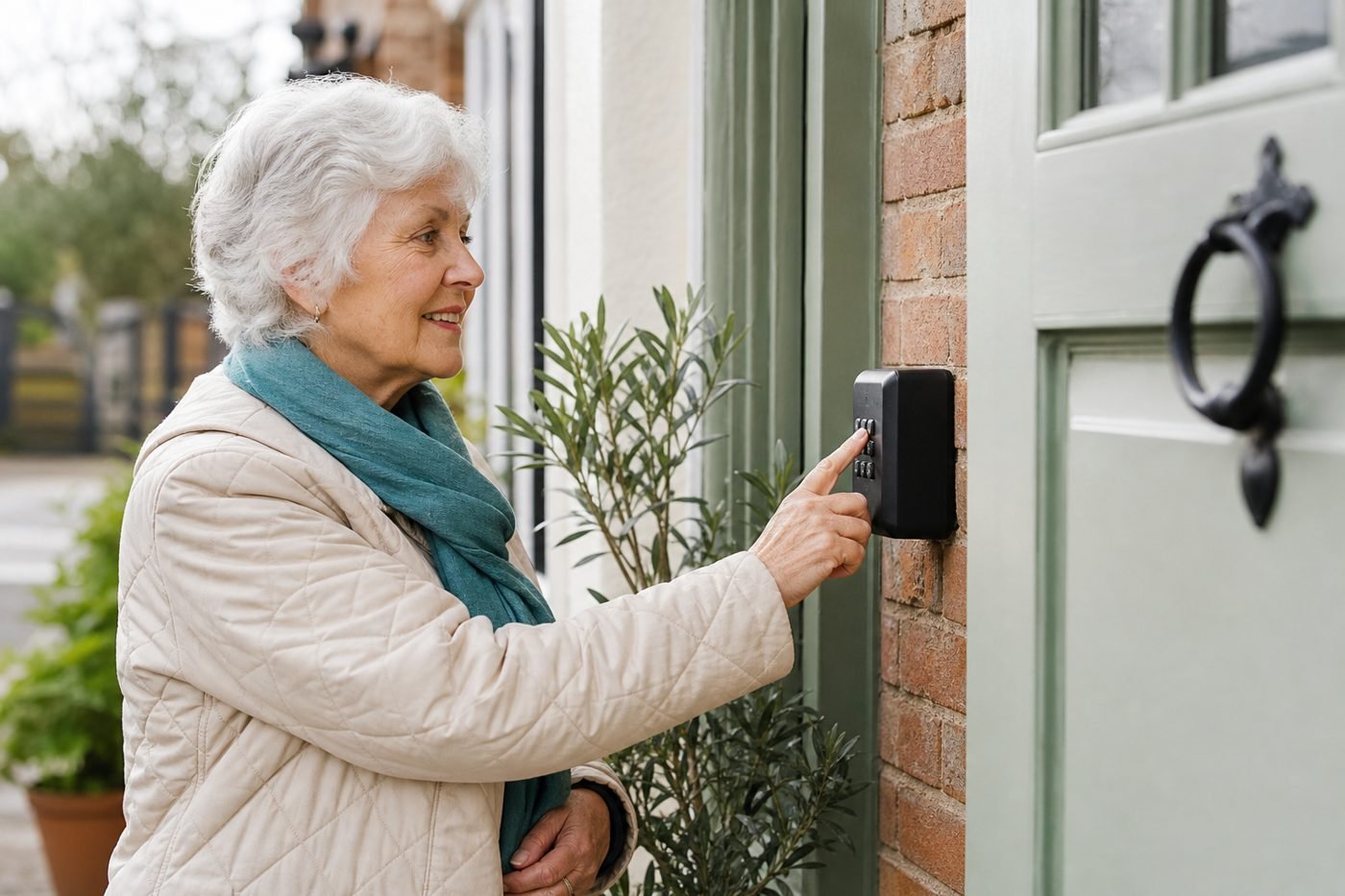
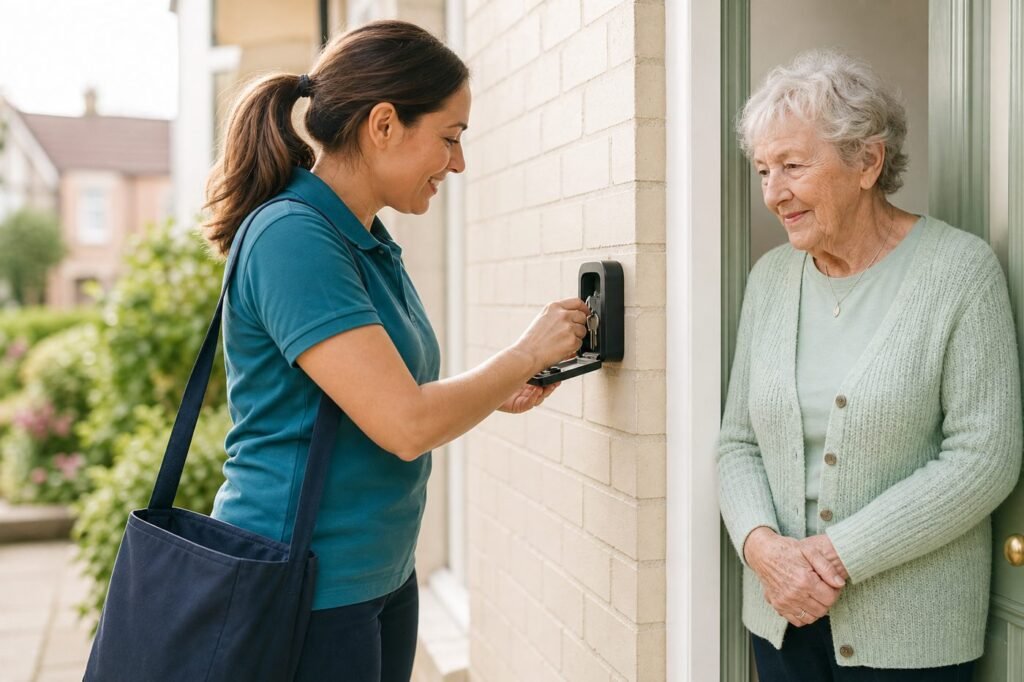
A key safe is a small, locked box fixed to the outside wall by your front door, holding a spare key that only people with the code can reach. For older people who live alone, it means carers, family and emergency services can get in quickly without anyone needing to get up and answer the door. This guide explains how to choose a secure one and shares our shortlist.
Quick access for the people who need it
A good one balances easy access for carers and paramedics with strong security against break-ins.
In this guide- Police Preferred and certified models
- Push-button vs dial
- Our shortlist
- Fitting tips and how to change the code
The short answer
- Choose a certified modelLook for the Police Preferred Specification or independent security certification.
- Fit it into solid masonryIt should be bolted into brick or stone with the supplied fixings, not render or wood.
- Change the code regularlyUpdate it when carers change and never write it down near the door.
- Tell your insurerSome home insurers have rules about them, so check your policy.
Contents
Police Preferred and certified models
Basic boxes are fine for low-risk uses, but for a home where a vulnerable person lives, choose a certified model. Look for:
- Police Preferred Specification: a police-backed scheme (Secured by Design) for products that meet recognised security standards.
- Independent security ratings such as LPS 1175 or Sold Secure, which test how well a product resists attack.
Certified models are tougher, harder to force open and more likely to be accepted by home insurers.
Push-button or dial?
Push-button models are quick to open and easy for carers to use, even in the dark. Dial models use rotating wheels; they’re often cheaper but can be fiddly with cold hands or arthritis. Smart models open with a phone app as well as a code, so you can share temporary access.
Our key safe shortlist

Supra C500 Pro Key Safe
Best for: Homes with regular carer visits
A high-security push-button key safe to the Police Preferred Specification. The C500 design is widely used by councils and care providers across the UK.
What we like
- Police Preferred Specification
- Quick push-button code
- Trusted by care providers
Worth knowing
- Must be fitted into solid masonry
- Pricier than basic key safes
Prices and availability are accurate as of the last update and may change. Please check the listing (including maximum user weight and dimensions) before you buy.

Keyguard XL Dual Certified Key Safe
Best for: Maximum peace of mind
A Police Preferred push-button model that the listing describes as dual certified, with an XL compartment for several keys or a fob.
What we like
- Dual security certification
- Large compartment
- Push-button code
Worth knowing
- Bigger on the wall
- Needs careful fitting
Prices and availability are accurate as of the last update and may change. Please check the listing (including maximum user weight and dimensions) before you buy.

Master Lock Police Approved XL Key Safe
Best for: A well-known brand with certification
A certified extra-large box from Master Lock, one of the best-known names in locks, with room for several keys.
What we like
- Certified security
- Extra-large capacity
- Weatherproof
Worth knowing
- Dial-style code can be fiddly
- Higher price than basic Master Lock models
Prices and availability are accurate as of the last update and may change. Please check the listing (including maximum user weight and dimensions) before you buy.

Master Lock Wall-Mounted Key Safe (Medium)
Best for: Low-risk uses such as a garage or holiday let
A simple, low-cost box with a combination dial. It isn’t police certified, so we don’t recommend it for the main front door of a vulnerable person’s home.
What we like
- Very affordable
- Easy to fit
- Well-known brand
Worth knowing
- Not police certified
- Less resistant to attack
Prices and availability are accurate as of the last update and may change. Please check the listing (including maximum user weight and dimensions) before you buy.

Master Lock Smart Bluetooth Key Safe
Best for: Families who want to share temporary access
Opens with the Master Lock app over Bluetooth or with a backup code, so you can grant and remove access for different carers and see when it’s been opened.
What we like
- App access and backup code
- Temporary access for carers
- Access history
Worth knowing
- Expensive
- Battery needs checking
Prices and availability are accurate as of the last update and may change. Please check the listing (including maximum user weight and dimensions) before you buy.
Fitting a key safe
- Fit it into solid brick or stone, using the fixings supplied, not into render, cladding or wood.
- Choose a discreet spot that’s out of view from the street but easy for carers to find.
- Make sure it’s at a comfortable height for carers and paramedics to reach.
- If in doubt, ask a locksmith, your council or your alarm provider to fit it.
How to change the code on a key safe
The method depends on the model, so always follow the manufacturer’s instructions. In general:
- Open the key safe with the current code.
- Find the reset mechanism inside the door (a lever, switch or the back of the buttons).
- Set the new code, then return the reset mechanism to its locked position.
- Test the new code several times with the door open before closing it.
Change it when carers change, after anyone who no longer needs access has used it, and every few months as good practice. Share it by phone rather than text where you can.
More ways to stay safe at home
It works well alongside a personal alarm, so responders can get in quickly. For simple, safety-focused tech, see our pillar guide to mobile phones for elderly people.
More trusted help with choosing a key safe
Ask your council or personal alarm provider whether they can supply and fit an approved key safe. Age UK has more free advice on staying safe and secure at home.
Start with our main guide
- Best Mobile Phones for the Elderly UK – Big-button phones, simple smartphones and SOS buttons compared.
Frequently asked questions
What is the most secure key safe in the UK?
Look for models certified to the Police Preferred Specification or independent standards such as LPS 1175. Push-button models like the Supra C500 Pro are widely used by care providers.
How do you change the code on a key safe?
Open the key safe, use the reset mechanism inside the door to set a new code, then lock it again and test it with the door open. Follow your model’s instructions.
Will a key safe affect my home insurance?
It can. Some insurers require a police-approved key safe or ask to be told. Check your policy or call your insurer.
Can the council fit a key safe?
Many councils and personal alarm services supply and fit approved models, sometimes free or at low cost for people with care needs.