Checking your blood pressure at home is one of the simplest things you can do to look after your heart. The best blood pressure monitors aren’t the ones with the most features; they’re the ones that have been clinically validated for accuracy, fit your arm properly and are easy to use. This guide explains what to look for in blood pressure monitors and shares our shortlist of well-known validated models.
Accurate readings, without the worry
High blood pressure rarely causes symptoms, so the only way to know your numbers is to measure them. A good home monitor helps you and your GP see what’s really going on.
In this guide- Why ‘validated’ matters more than anything else
- Upper-arm or wrist: which to choose
- Our shortlist of validated monitors
- How to take an accurate reading at home
The short answer
- Choose a validated monitorCheck the exact model is on the British and Irish Hypertension Society (BIHS) list of monitors approved for home use.
- Upper-arm is usually bestUpper-arm monitors are generally recommended over wrist monitors for home use.
- The cuff must fitMeasure around your upper arm; a cuff that’s too small or too large gives the wrong reading.
- Share your readingsKeep a simple record and take it to your GP or practice nurse, rather than acting on one reading alone.
Contents
Why ‘validated’ matters
Not every monitor sold online has been properly tested. A validated monitor has passed independent accuracy testing against recognised standards. In the UK, the British and Irish Hypertension Society (BIHS) publishes an independent list of monitors approved for home use, and it’s the list GPs and pharmacists trust.
Model names change and similar-looking monitors can differ inside, so always check the exact model number against the BIHS list before you buy. The BIHS also suggests replacing a home monitor after at most around four years of use.
Upper-arm or wrist?
Upper-arm monitors are generally recommended for home use. They’re less affected by how you hold your arm and are what your GP surgery uses.
Wrist monitors are smaller and handy if upper-arm cuffs are painful or don’t fit, but you need to hold your wrist at heart level for every reading. Ask your GP or pharmacist if a wrist monitor is suitable for you.
Getting the right cuff size
Measure around the middle of your upper arm with a soft tape measure. Compare it with the cuff range on the listing. Many monitors come with a standard cuff that fits a wide range of arms, and large cuffs are sold separately. A cuff that’s too small can make your reading look higher than it is.
Our blood pressure monitor shortlist
These monitors come from long-established brands whose models appear on the BIHS home-use list. Check the exact model number on the BIHS list before you buy, as versions change.

Omron M3 Comfort
Best for: Most people who want simple, reliable readings
A popular upper-arm monitor with Omron’s pre-formed ‘Intelli Wrap’ cuff, which is designed to give accurate readings wherever it sits on the upper arm. It has a clear display, stores readings for two users and flags irregular heartbeats.
What we like
- Easy-to-fit wide-range cuff
- Clear, large display
- Memory for two users
Worth knowing
- No app connection
- Bulkier cuff than basic models
Prices and availability are accurate as of the last update and may change. Please check the listing (including maximum user weight and dimensions) before you buy.

Omron M7 Intelli IT
Best for: Sharing readings with your GP or family
This connected monitor sends readings to Omron’s free app by Bluetooth, making it easy to keep a record, spot trends and show your GP. It uses the same comfortable Intelli Wrap style cuff.
What we like
- Bluetooth app for easy record keeping
- Comfortable wide-range cuff
- Detects irregular heartbeat
Worth knowing
- More expensive
- App is optional but adds a step
Prices and availability are accurate as of the last update and may change. Please check the listing (including maximum user weight and dimensions) before you buy.

A&D Medical UA-651
Best for: A dependable, no-fuss monitor at a gentle price
A&D is a respected medical brand, and the UA-651 is a straightforward upper-arm monitor with a simple one-button design. It has published validation studies and a wide-range cuff option.
What we like
- Simple one-button operation
- Good value
- Respected medical brand
Worth knowing
- Fewer extra features
- Basic display
Prices and availability are accurate as of the last update and may change. Please check the listing (including maximum user weight and dimensions) before you buy.

Microlife BP B3 AFIB
Best for: People who want an atrial fibrillation (AF) check too
Microlife’s AFIB monitors include a feature designed to detect possible atrial fibrillation during routine readings. If it shows an AF warning, it’s a prompt to see your GP, not a diagnosis.
What we like
- Possible AF detection built in
- Averages several readings
- Clear display
Worth knowing
- AF alerts need confirming by a GP
- Check model on the BIHS list
Prices and availability are accurate as of the last update and may change. Please check the listing (including maximum user weight and dimensions) before you buy.
How to take an accurate reading at home
- Avoid caffeine, smoking and exercise for about 30 minutes before measuring, and empty your bladder.
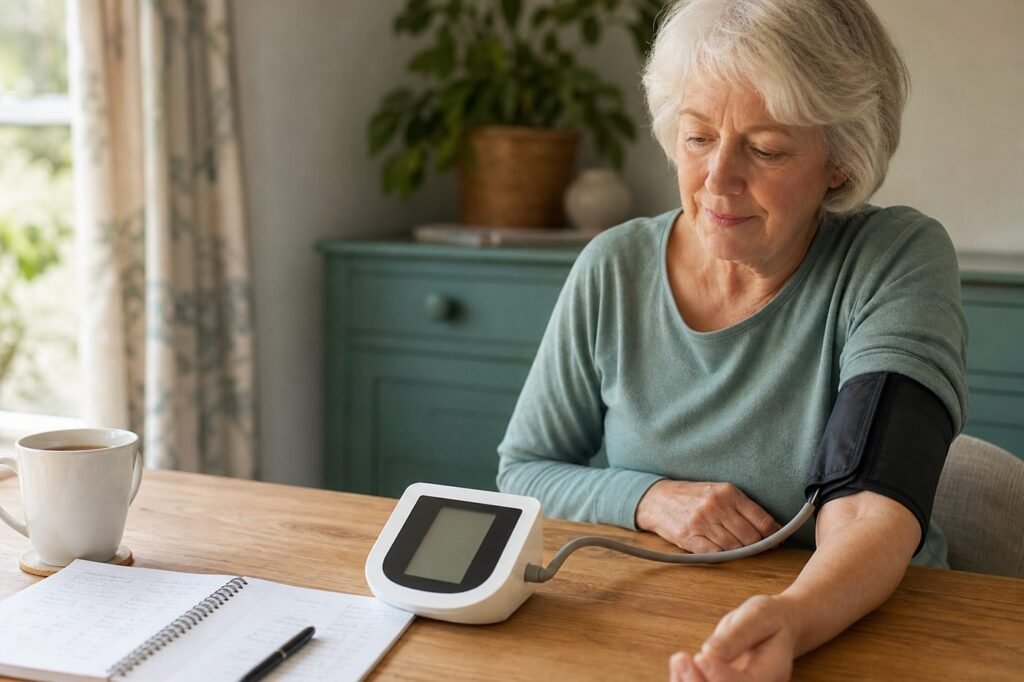
- Sit quietly for five minutes in a chair with your back supported and feet flat on the floor. Don’t cross your legs.
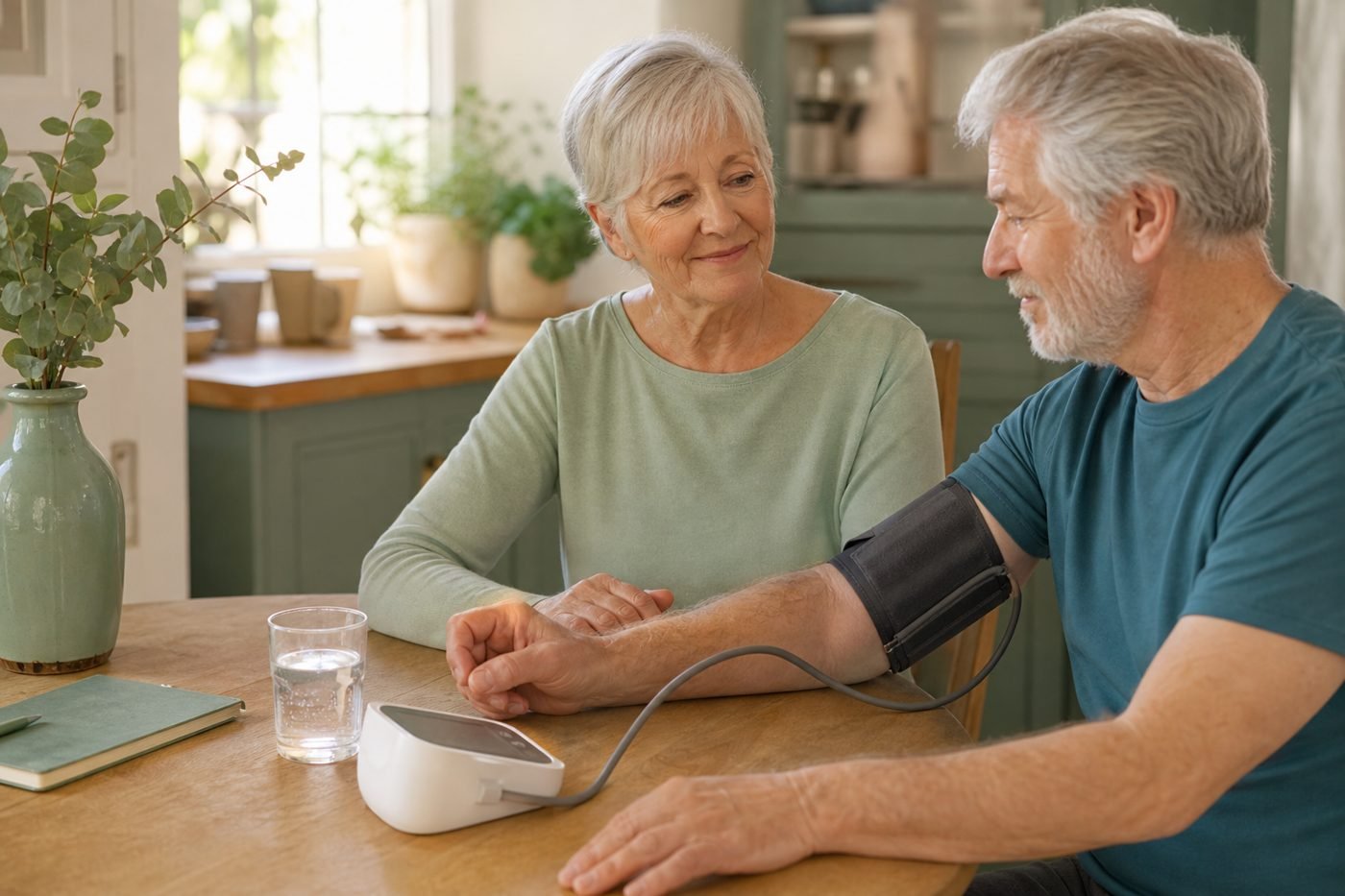
- Rest your arm on a table so the cuff is level with your heart. Use bare skin, or thin clothing at most.
- Stay still and don’t talk while the monitor measures.
- Take two readings, a minute or two apart, and record both. Measuring at the same times each day helps.
What do the numbers mean?
Blood pressure is written as two numbers, such as 125/80. The first (systolic) is the pressure when your heart beats; the second (diastolic) is the pressure between beats. The NHS describes an ideal reading as somewhere between 90/60 and 120/80. Home readings tend to be a little lower than clinic readings, so your GP will interpret your numbers for you.
Can I get a blood pressure monitor free or VAT-free?
Many pharmacies offer free blood pressure checks for adults over 40. Monitors aren’t usually provided free to buy at home, though some GP practices lend them. Blood pressure monitors are not generally eligible for disability VAT relief.
Looking for other ways to stay safe at home? See our guide to personal alarms and fall detectors.
More trusted advice on blood pressure monitors
Before buying, check the exact model against the British and Irish Hypertension Society list of validated monitors. For more on what your numbers mean and how to lower blood pressure, see the NHS advice on high blood pressure.
Start with our main guide
- Best Mobile Phones for the Elderly UK – Big-button phones, simple smartphones and SOS buttons compared.
Frequently asked questions
Which blood pressure monitor do doctors recommend?
Doctors and the NHS recommend monitors that are clinically validated. In the UK, check that the exact model is on the British and Irish Hypertension Society (BIHS) list of monitors approved for home use.
Are wrist blood pressure monitors accurate?
Some validated wrist monitors are accurate, but readings depend on holding your wrist at heart level. Upper-arm monitors are usually recommended for home use.
What time of day should I check my blood pressure?
Many people measure in the morning and evening, at the same times each day, before medication and before eating. Your GP may give you a specific routine.
How often should I replace my blood pressure monitor?
The BIHS suggests replacing home monitors after a maximum of about four years of use, or sooner if it’s damaged or giving unusual results.