When you start looking at wheelchairs, the first question is usually self-propelled vs transit wheelchair: which type is right for you or the person you care for? The difference is mostly about the wheels, but it shapes everything from independence to how easily the chair fits in a car. Here’s a calm, clear explanation to help you decide.
Two kinds of wheelchair, explained simply
A self-propelled chair can be wheeled by the person sitting in it. A transit chair is designed to be pushed by someone else.
In this guide- The key differences at a glance
- Who each type of chair suits best
- Four questions to help you choose
- Other options, including powered chairs
The short answer
- Self-propelled = independenceLarge rear wheels with hand rims let the user move themselves, and a companion can still push.
- Transit = light and compactSmall wheels make transit chairs lighter and easier to fold and lift.
- Think about the user's armsSelf-propelling needs reasonable arm strength and shoulder health.
- Many families have bothA self-propelled chair at home and a light transit chair for the car is a common combination.
Contents

The differences at a glance
| Self-propelled | Transit | |
|---|---|---|
| Rear wheels | Large (often around 22–24 inches) with hand rims | Small (often around 12 inches) |
| Who moves the chair? | The user, or a companion | A companion |
| Weight | Usually heavier | Usually lighter |
| Folded size | Bulkier, though wheels often quick-release | More compact |
| Brakes | Parking brakes for the user | Parking brakes, often with attendant brakes |
| Best for | Daily use and independence | Occasional trips, appointments, travel |
Who a self-propelled wheelchair suits
A self-propelled chair suits someone who has the strength and coordination in their arms and shoulders to wheel themselves, at least some of the time. It gives the freedom to move around the house, garden or shops without waiting for help, which matters enormously for confidence and dignity.
Larger wheels also cope better with kerbs, uneven paving and grass, even when a companion is pushing.
Who a transit wheelchair suits
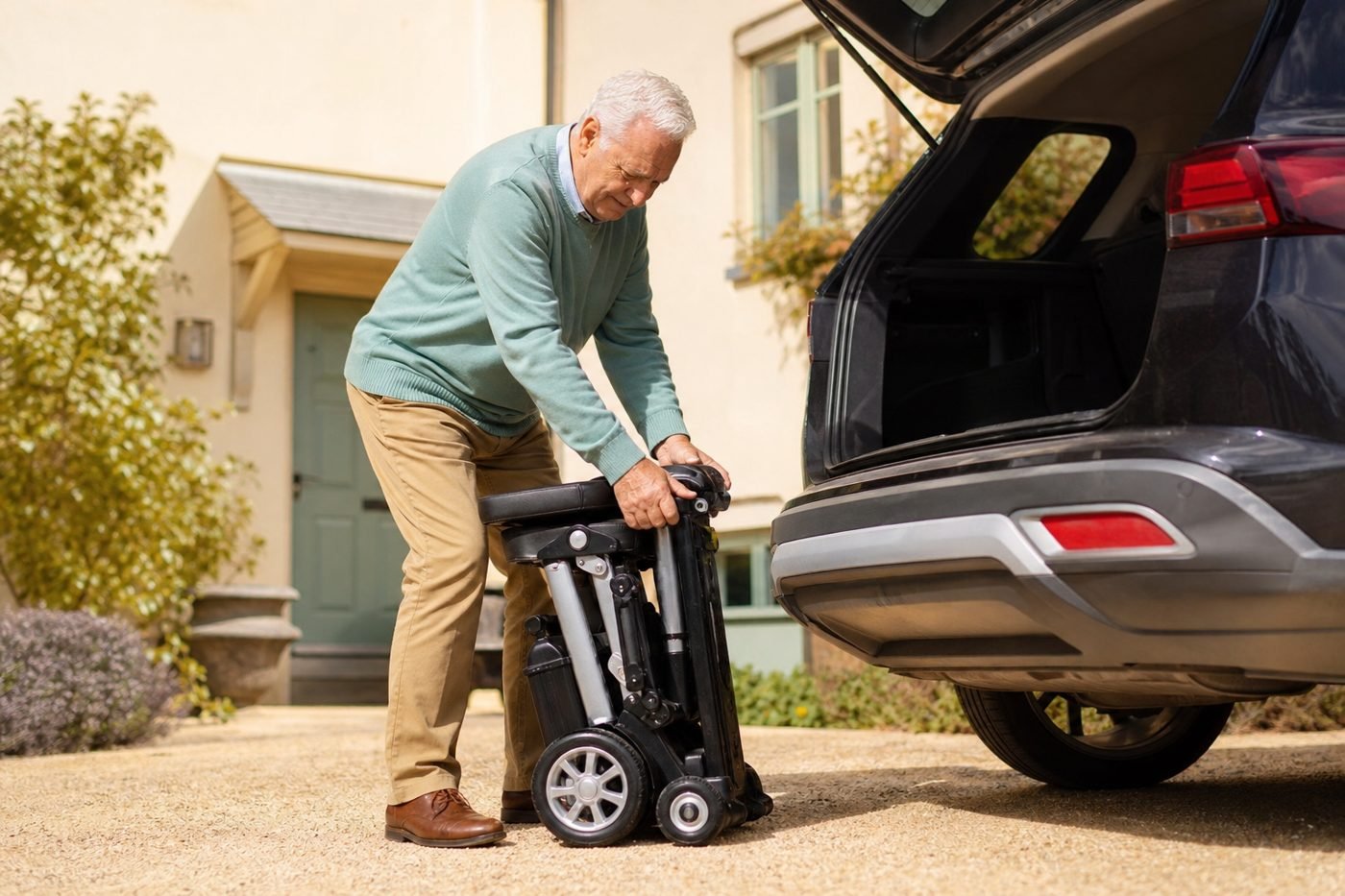
A transit chair suits someone who can walk short distances but needs to sit for longer outings, or who can’t safely wheel themselves. Because transit chairs are lighter and more compact, carers often find them easier to lift into the car. Attendant brakes give the person pushing more control on slopes.
Four questions to help you choose
- Will the user want to move themselves? If yes, and their arms and shoulders allow it, choose self-propelled.
- How often will the chair be used? Daily use leans towards self-propelled with good seating. Occasional trips lean towards transit.
- Who will lift it into the car? If a carer has a bad back, weight and folded size matter most.
- Where will it be used? Gravel, grass and old pavements are easier with larger wheels.
Other options to consider
- Powered wheelchairs suit people who can’t self-propel but want independence. They’re heavier and need careful assessment.
- Power packs can be fitted to some manual chairs to help a companion with hills.
- Mobility scooters suit people who can walk a little and transfer easily, but need help going further. See Class 2 vs Class 3 scooters.
If you’ve decided, our guide to the best lightweight folding wheelchairs covers both types. And if you need a chair long-term, the NHS wheelchair service may be able to help: see how to get free mobility aids.
More help with the self-propelled vs transit wheelchair choice
An occupational therapist or your local NHS wheelchair service can help with the self-propelled vs transit wheelchair decision if you’re still unsure. The British Red Cross lends wheelchairs short-term in many areas, so you can try one first, and Age UK has more advice for carers.
Start with our main guide
- Best Lightweight Wheelchairs UK: Folding and Car-Friendly – Light, car-friendly chairs for days out, appointments and holidays.
Frequently asked questions
Can a self-propelled wheelchair be pushed by someone else?
Yes. Almost all self-propelled wheelchairs have push handles, so a companion can push when the user is tired.
Are transit wheelchairs lighter?
Usually, yes. Their smaller wheels and simpler frames make them lighter and more compact to fold.
Which is better for a car?
Transit chairs are typically easier to lift and fit in smaller boots, although many self-propelled chairs have quick-release wheels to make lifting easier.
Which wheelchair is best for elderly users?
It depends on whether they can wheel themselves. A self-propelled chair supports independence; a transit chair is lighter for a carer to manage.