Personal alarms for elderly people mean help is only a button press away. For someone living alone, and for the family who worries about them, that reassurance can be priceless. This guide explains how personal alarms for elderly users work, the difference between monitored and family-alert alarms, and what to look for.
Help at the press of a button
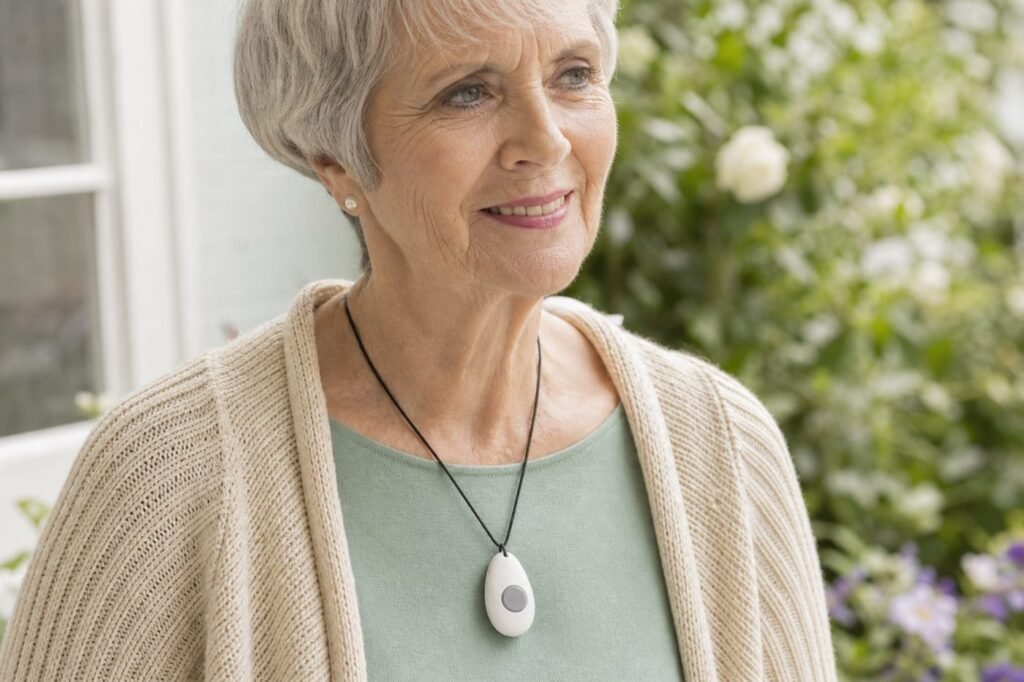
Personal alarms are worn as a pendant or on the wrist. Press the button, and you’re connected to a response team or family members.
In this guide- How personal alarms work
- Monitored vs family alarms
- Fall detection and GPS
- What to look for and typical costs
The short answer
- Wear it all the timeAn alarm only helps if it’s on you, including in the bathroom and at night.
- Monitored = 24/7 responseA monitoring centre answers calls day and night and contacts family or emergency services.
- Fall detectors add protectionAutomatic fall detection can raise an alert if someone can’t press the button.
- Check your councilMany councils run their own alarm (telecare) service.
Contents
How do personal alarms work?
Most alarms have a wearable button (a pendant or wristband) and either a base unit at home or a built-in mobile connection. When you press the button, the alarm calls a monitoring centre or a list of family contacts. You can usually speak to them through the base unit or the pendant itself.
Since the UK’s landline switch to digital phone lines, check that any home alarm is digital-ready or uses a mobile (SIM) connection.
Monitored or family alerts?
- Monitored alarms connect to a 24-hour response centre. Trained staff talk to you, call your chosen contacts, and send an ambulance if needed. There’s usually a monthly fee.
- Unmonitored (family) alarms call or text family members directly. There’s no monthly fee, but it relies on someone answering.
Fall detectors and GPS alarms
Automatic fall detectors sense a sudden fall followed by stillness and raise an alert, which helps if someone is unconscious or confused. They’re not perfect, so the button should still be used when possible.
GPS alarms work outside the home using a mobile signal, so they can share your location. They suit people who still go out alone, including some people living with dementia.
What to look for in personal alarms for elderly people
- Waterproof pendant so it can be worn in the shower, where many falls happen.
- Two-way speech through the pendant, not just the base unit.
- Long battery life and low-battery warnings.
- Range that covers the garden if base-unit based.
- Fall detection if the person is at higher risk of falling.
- No long contracts and clear monthly pricing.

SureSafeGO Pendant Alarm With Fall Detection
Best for: People who go out and about, and family-based alerts
A mobile pendant alarm with GPS location and fall detection, so it works at home and when out. Pressing the button connects to chosen contacts or a monitoring service, depending on the plan you choose.
What we like
- Works at home and out
- Shares location
- Fall detection on many models
Worth knowing
- Needs regular charging
- Relies on mobile signal
Prices and availability are accurate as of the last update and may change. Please check the listing (including maximum user weight and dimensions) before you buy.

CallToU WiFi Personal Alarm
Best for: Family alerts at home
A waterproof panic button that sends instant alerts to family members’ phones over home WiFi. There’s no monthly monitoring fee, but it relies on someone responding.
What we like
- No monthly fee
- Waterproof button
- Instant phone alerts
Worth knowing
- Needs home WiFi
- No 24/7 monitoring centre
Prices and availability are accurate as of the last update and may change. Please check the listing (including maximum user weight and dimensions) before you buy.
How much do personal alarms cost?
Unmonitored alarms are usually a one-off purchase. Monitored services typically involve a monthly fee, plus sometimes an installation charge. Many councils run their own telecare service, sometimes subsidised for people with assessed needs, so it’s worth asking your local authority first. Alarms bought for a disabled person or someone with a long-term condition may qualify for VAT relief.
For more home safety ideas, read our guides to shower chairs and bed rails.
More trusted help with personal alarms for elderly people
Many councils run their own personal alarms for elderly residents, so ask your local authority first. The NHS guidance on preventing falls and Age UK have more free advice on staying safe at home.
Start with our main guide
- Best Mobile Phones for the Elderly UK – Big-button phones, simple smartphones and SOS buttons compared.
Frequently asked questions
What is the best personal alarm for elderly people?
It depends on lifestyle. A home pendant alarm suits people who mostly stay in; a GPS alarm suits people who go out alone. Add fall detection for those at higher risk of falls.
Do personal alarms work without a landline?
Many modern alarms use a mobile SIM connection and don’t need a landline. If you have a home alarm, check it’s compatible with digital phone lines.
Can I get a personal alarm from the council?
Many councils run a telecare or community alarm service. Contact your local authority’s adult social care team to ask about costs and eligibility.
Are fall detectors reliable?
They detect many falls but not all, and occasionally raise false alarms. They’re a useful extra layer of protection alongside the help button.