In the UK, mobility scooters and powered wheelchairs fall into two classes. Understanding Class 2 vs Class 3 mobility scooters helps you choose the right one and use it safely and legally. The short version: a Class 2 mobility scooter is for pavements, and a Class 3 mobility scooter can also go on the road.
Two classes, simply explained
The class of your scooter decides where you can ride it, how fast you can go and whether you need to register it.
In this guide- Class 2 scooters: pavement use
- Class 3 scooters: road and pavement
- DVLA registration, eyesight and insurance
- Which class is right for you?
The short answer
- Class 2 = 4mph pavement scootersDesigned for pavements, with a top speed of 4mph.
- Class 3 = up to 8mph on roadsMust be limited to 4mph on pavements, and registered with the DVLA.
- No licence neededYou don’t need a driving licence for either class, but you must be able to see well enough.
- Insurance is wiseIt isn’t a legal requirement, but it’s strongly recommended.
Contents
Class 2 mobility scooters
- Maximum speed of 4mph.
- Designed for pavements. They can only be used on the road where there’s no pavement, such as crossing.
- No registration needed.
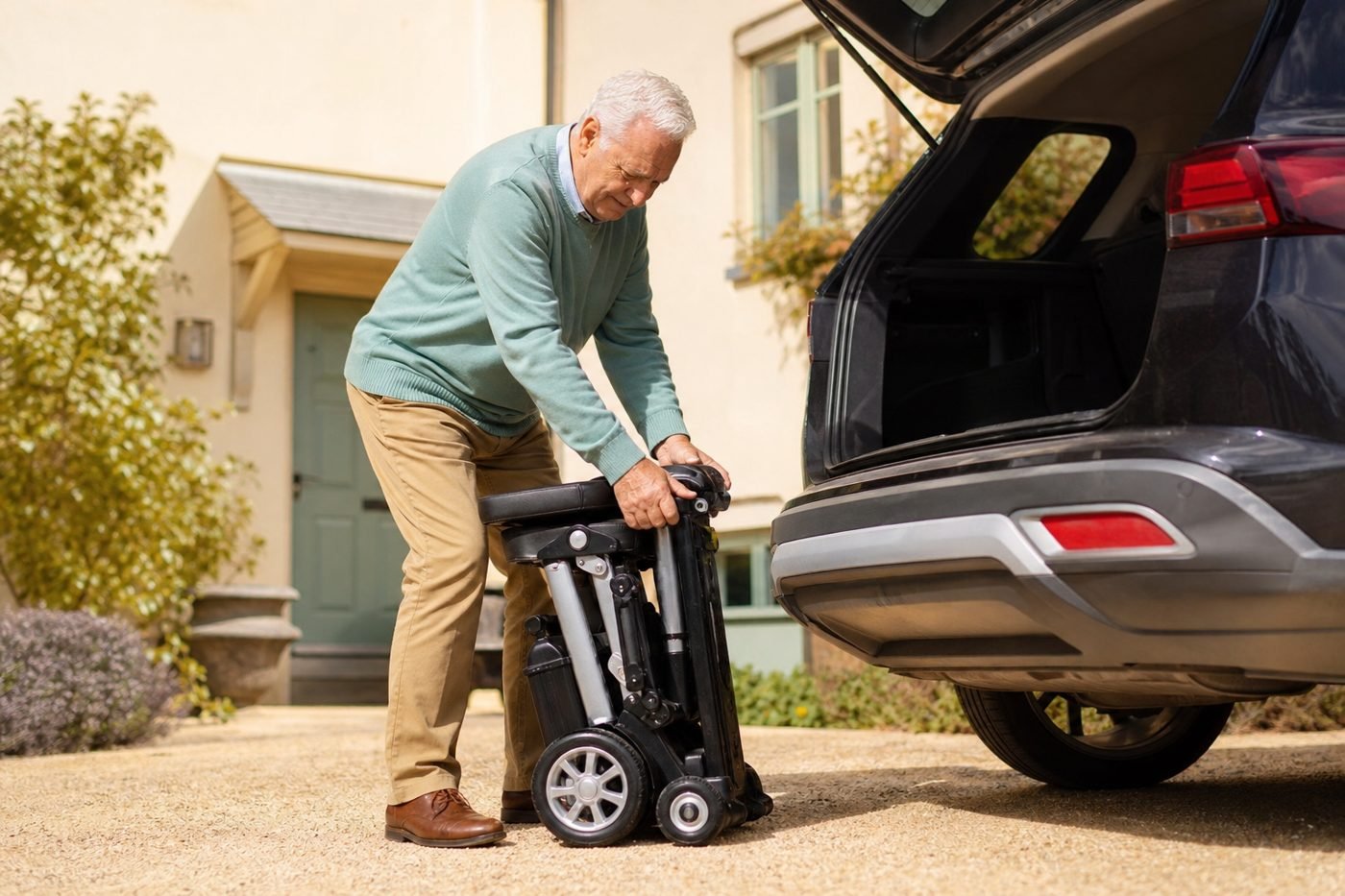
- Includes most folding, boot and smaller pavement scooters.
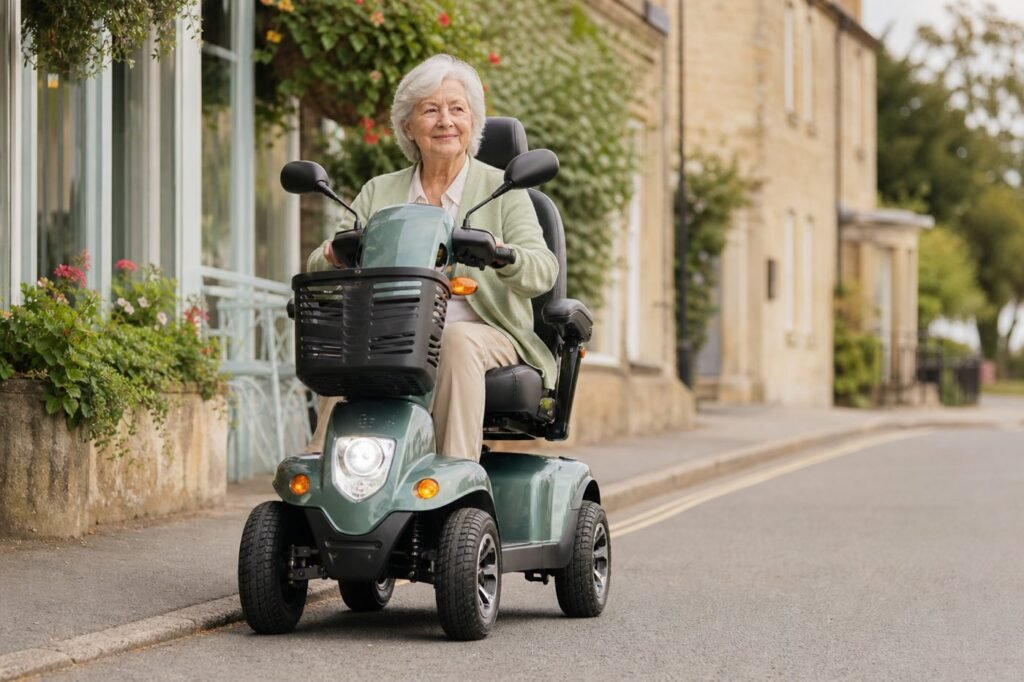
Class 3 mobility scooters
- Maximum speed of 8mph on the road, and must be limited to 4mph on pavements (they have a speed switch).
- Must have lights, indicators, a horn, a rear-view mirror and an efficient braking system.
- Must be registered with the DVLA. Registration is free, and there’s no vehicle tax to pay.
- You must be at least 14 to drive one.
- They must not be used on motorways, bus lanes or cycle-only lanes. Dual carriageways are not recommended; if you do use one where the speed limit is over 50mph, you must use a flashing amber beacon.
Class 2 vs Class 3 mobility scooters at a glance
| Class 2 | Class 3 | |
|---|---|---|
| Top speed | 4mph | 8mph road, 4mph pavement |
| Where | Pavements | Roads and pavements |
| DVLA registration | Not needed | Required (free) |
| Lights and indicators | Optional | Required |
| Minimum age | None set | 14 |
Which class is right for you?
Choose Class 2 if you mainly go to local shops and along pavements, want to fold it into a car, or have limited storage.
Choose Class 3 if you want to travel further, need to use roads where pavements are poor, or want more comfort and suspension for longer journeys.
Riding safely
- Give way to pedestrians on pavements, and slow down in busy areas.
- Use dropped kerbs where possible.
- Plan routes that avoid steep slopes and very busy roads.
- Keep your scooter’s batteries charged and tyres checked.
For our scooter recommendations in both classes, see the best mobility scooters UK.
More trusted help with class 2 vs class 3 mobility scooters
The official GOV.UK rules for mobility scooters and powered wheelchairs explains the full legal detail on class 2 vs class 3 mobility scooters, including how to register a Class 3 scooter with the DVLA.
Start with our main guide
- Best Mobility Scooters UK (2026): A Calm Buying Guide – Folding, boot, pavement and road scooters, and how to choose.
Frequently asked questions
Can a Class 2 mobility scooter go on the road?
Only where there is no pavement, or to cross a road. Class 2 scooters are designed for pavement use at up to 4mph.
Do Class 3 mobility scooters need to be registered?
Yes. Class 3 scooters must be registered with the DVLA. Registration is free and there’s no vehicle tax to pay.
Do I need insurance for a mobility scooter?
It isn’t a legal requirement, but insurance is strongly recommended to cover theft, damage and injury to others.
How old do you have to be to drive a Class 3 scooter?
You must be at least 14 years old to drive a Class 3 mobility scooter.